
South Dakota DPS Motorcycle Practice Test 41
- Questions25
- Correct to pass20
- Passing score80%
- Minimum age14 years
-
1. You have a steady green ball to turn left, and the oncoming traffic gets a green left arrow. What does that mean for you?
Show answer
Answer C: Oncoming vehicles will turn across your path, so you must wait
A green ball is permissive, so when the oncoming side receives a protected arrow those vehicles have priority and you must yield until they clear.
-
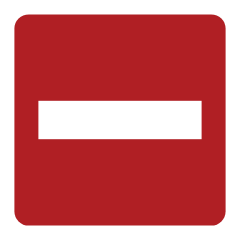
2. At which location is this sign normally installed?
Show answer
Answer D: Facing traffic that could turn into a one-way roadway or ramp against the flow
It is posted where a driver could otherwise enter a ramp or a one-way roadway from the wrong end, so it faces exactly the traffic that has to be kept out.
-
3. A sign at the intersection prohibits U-turns, but the opening looks wide and clear. What may you do?
Show answer
Answer B: Obey the sign and turn around somewhere else
A prohibition applies whatever the traffic looks like at that moment, usually because of sight distance or conflicts you cannot see from the lane.
-
4. A pedestrian is waiting to cross ahead of you and you have slowed down. What helps most?
Show answer
Answer D: Making eye contact, so that you both know you have seen each other
Eye contact confirms that you have seen each other; waving someone across can send them into the path of another vehicle.
-
5. Why should riding boots come above the ankle?
Show answer
Answer C: The ankle is easily broken and is left bare by a low shoe
The ankle takes a lot of damage when a motorcycle goes down or a foot is trapped, and a low shoe leaves it completely unprotected.
-
6. What happens if a passenger leans the opposite way to the rider in a curve?
Show answer
Answer B: The motorcycle becomes harder to steer and may run wide in the curve
A passenger leaning against the turn fights the lean angle the rider has set, forcing extra steering effort and pushing the machine toward the outside of the curve.
-
7. How should a helmet sit on the head once it is fastened?
Show answer
Answer C: Level on the head, with the eye port giving a clear view of the road
A helmet worn level protects the forehead and gives full vision, while one pushed back leaves the forehead exposed in a crash.
-
8. When may a passenger get off the motorcycle?
Show answer
Answer D: Only after the rider has stopped, braced the machine and said so
A passenger climbing off before the rider is ready removes weight from the back of a machine the rider is still holding upright, which can drop it.
-
9. You want to turn right at a steady red light and no sign prohibits the turn. What is required?
Show answer
Answer B: Come to a complete stop, then yield to traffic and pedestrians before turning
A right turn on a steady red is permitted only after a complete stop and only after yielding to cross traffic and to pedestrians, and a posted sign can prohibit it entirely.
-
10. How does eating a large meal before drinking affect impairment?
Show answer
Answer D: It slows absorption but the alcohol still reaches the blood and impairs you
Food delays how quickly alcohol enters the bloodstream, which can make the peak arrive later, but all of the alcohol is eventually absorbed.
-
11. What do yellow lines painted on a roadway separate?
Show answer
Answer D: Traffic moving in opposite directions
Yellow markings separate opposing streams of traffic, and they also mark the left edge of a divided highway or a one-way roadway.
-
12. You are driving on the through road of a T-intersection and want to turn left into the side road. Oncoming traffic is approaching on the through road. What must you do?
Show answer
Answer C: Yield to the oncoming traffic before you turn
The vehicle waiting in the stem of the T yields to both of you, but you still owe the right of way to oncoming through traffic before turning across it.
-
13. Why is reflective material more useful than bright color once it is dark?
Show answer
Answer C: It throws headlight light back toward the driver, while color goes unseen
Color needs daylight to be seen, while reflective material returns the beam of an approaching vehicle straight back to its driver.
-
14. You reach a stretch of road covered by moving flood water of unknown depth. What is the correct decision?
Show answer
Answer D: Turn around and take another route
About a foot of moving water is enough to carry away most cars, and the roadbed under the water may already be washed out, so the only safe choice is to turn around.
-
15. When is the right time to put on rain gear?
Show answer
Answer C: Before the rain reaches you, at a safe place off the roadway
Once you are wet you stay cold for the rest of the ride, so stop somewhere safe and put the rain suit on while you are still dry.
-
16. Your motorcycle has a grab rail behind the passenger seat. What should the passenger know about using it?
Show answer
Answer C: It is fine to hold, but they must still brace against acceleration
A rail behind the passenger gives a secure grip but does nothing to stop them sliding backward, so they still need to expect the machine to pull away.
-
17. A train has just cleared a crossing that carries two sets of tracks. What should you do?
Show answer
Answer B: Wait and look both ways for a second train
A passing train hides a second train on the other track, so wait until the signals stop and you can see that both tracks are clear.
-
18. What is the main reason a rider should keep a generous following distance on a rough, broken road?
Show answer
Answer B: So the rider can see and plan for holes and broken pavement in time to react
The vehicle ahead hides the pavement, so extra space gives you time to spot a hole or a broken edge and to choose a path around it.
-
19. You are overtaking in a short passing lane on a two-lane road and it is about to end. What must you do?
Show answer
Answer A: Finish the pass and move back to the right before it ends
The added lane ends and the traffic returns to a single lane in each direction, so the pass has to be complete before the pavement runs out.
-
20. What does the last step of T-CLOCS, Stands, ask a rider to check?
Show answer
Answer D: That the stands are not bent and that their springs hold them up
A bent stand or a weak spring can let the stand fall while riding, so both the sidestand and the centerstand are checked for damage and spring tension.
-
21. A squirrel darts into your path a short distance ahead. What is normally the safest response?
Show answer
Answer C: Hold your line, brake as much as is safe, and accept hitting a small animal
Swerving without space, or crashing while braking, hurts the rider far more than a small animal does, so stay in your lane and slow as much as traction allows.
-
22. You are leaving a private driveway and entering a public street. What are you required to do?
Show answer
Answer B: Stop and yield to traffic on the street and to pedestrians on the sidewalk
A driver entering a roadway from a driveway, alley or private road must stop and yield to traffic on the roadway and to pedestrians on the sidewalk being crossed.
-
23. At an intersection the signal flashes red toward you and flashes yellow toward the cross street. Who must yield?
Show answer
Answer D: You must, because the flashing red faces your road
A flashing red means stop and yield like a stop sign, while a flashing yellow lets the other road proceed with caution.
-
24. When are you expected to switch from high beams to low beams?
Show answer
Answer D: When a vehicle approaches from ahead or you come up behind another vehicle
High beams blind other drivers, both those coming toward you and those you follow through their mirrors. Dim them whenever another vehicle is within range.
-
25. You reach the end of the acceleration lane and there is still no gap in the traffic. What should you do?
Show answer
Answer B: Slow down and merge behind the traffic rather than forcing your way in
Merging behind the traffic costs you only a little speed, while forcing into a space that is not there puts you alongside a vehicle with nowhere to go.